How Accountants Can Use AI to Save Time Without Losing Client Trust
Many accounting professionals are curious about AI but unsure where to start without risking accuracy or client confidence. The good news is that AI is most useful in accounting when it is applied to the administrative layer of the job, not the judgment calls that define the profession.
Where AI Actually Helps Accountants
AI tools tend to work best on the repetitive, time-consuming tasks that surround the core work of accounting, including:
- Drafting client emails and explanations in plain, clear language
- Summarising financial statements ahead of client meetings
- Organising bookkeeping notes and follow-up tasks
- Preparing first drafts of routine documentation
What AI Shouldn’t Replace
Client trust, professional judgment, and compliance decisions remain firmly human. AI works best as a drafting and organising assistant rather than a decision-maker, and the firms that get the most value treat it that way.
Getting Started
Start small. Pick one repetitive task, such as client emails or meeting summaries, and test an AI-assisted workflow for a couple of weeks before expanding further.
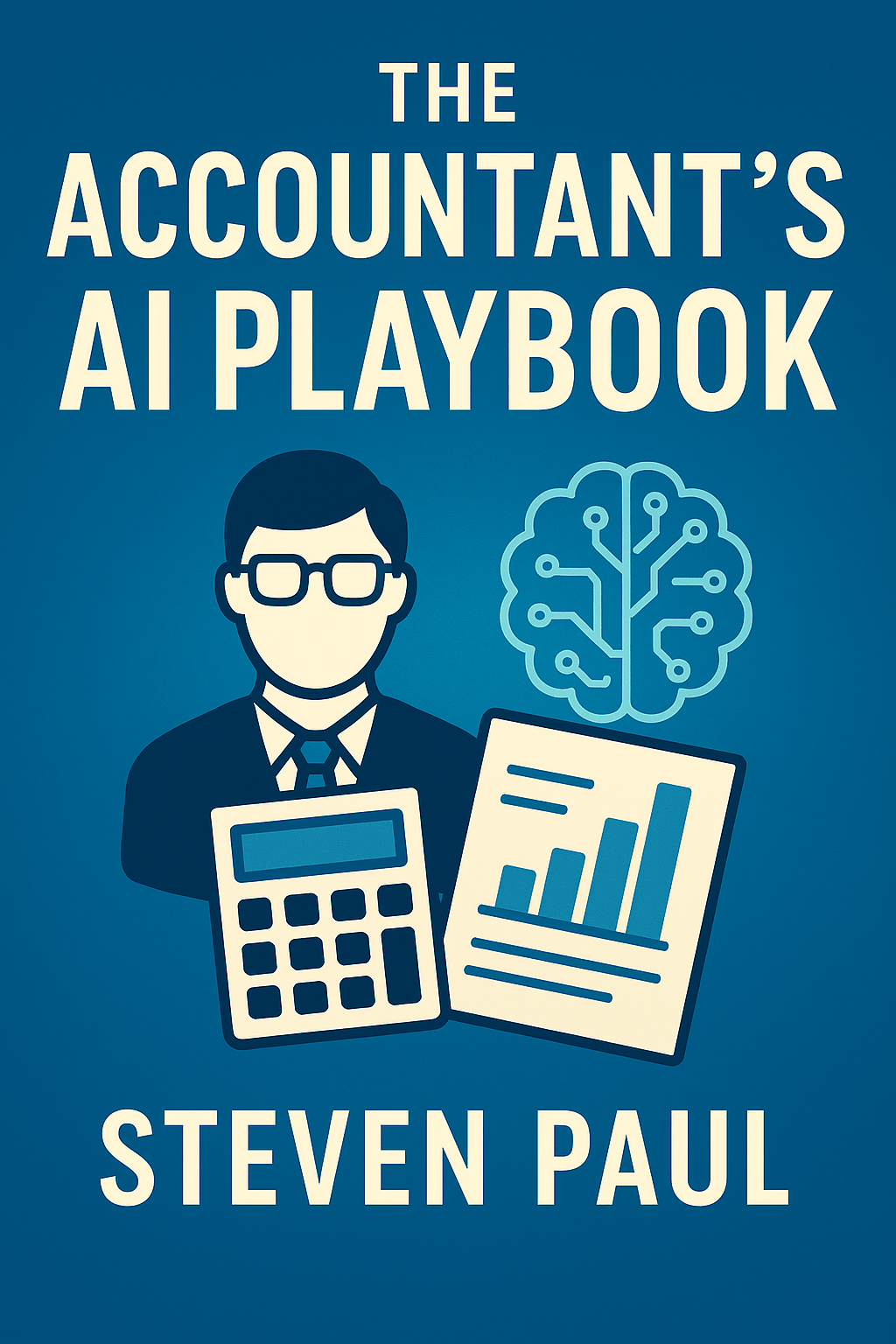
For a fuller framework built specifically for the profession, The Accountant’s AI Playbook by Steven Paul walks through these workflows in more depth, with realistic examples for everyday practice.